
23 years old (as of March 2026). Currently studying for Kyoto Certification Level 2.
Born and raised in Kyoto. Manager of MADOKA Kyoto Station West.
Young lion of VOYAN HOTELS Co., Ltd.
Loves whiskey, cigarettes, and his girlfriend. Narcissist.
This time, I’d like to introduce my favorite public bathhouse, “Miyako-yu —Shimabara—.”
It’s a 20-minute walk from MADOKA Kyoto Station West.
It’s a bit far, but it’s such a wonderful bathhouse, so please give it a try.
The History of Kyoto’s Public Bathhouses
Kyoto’s public bathhouses trace their origins to the steam baths (hot rooms) found in temples during the Heian period,
making Kyoto a “holy land of public bathhouses” boasting over 1,200 years of history.
Furthermore, Kyoto is a city blessed with abundant water. It is said that the Kyoto Basin holds
underground water reserves comparable to Lake Biwa.
The History of the “Shimabara” Area
Shimabara was originally counted among Kyoto’s six flower districts.
(Kyoto’s Five Flower Districts: Gion Kobu, Miyagawa-cho, Ponto-cho, Kamishichiken, Gion Higashi)
It is a historically significant town frequented by figures like the Shinsengumi, Saigo Takamori, and Katsura Kogoro.
Located away from the central districts (like Gion), Shimabara suffered from poor accessibility.
Its withdrawal from the Kyoto Flower District Association in 1976 halted its organized activities as a hanamachi.
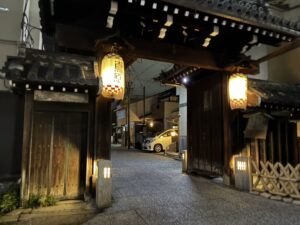
The symbolic Shimabara Great Gate, along with traditional brothel buildings like okiya (brothel houses)
and agariya (waiting houses), still stand today. If you find yourself nearby, please take a look.
The 4 Charms of “Miyako-yu —Shimabara—”
Charm ①: Excellent Water Quality
“Miyako-yu —Shimabara—” uses natural groundwater known as “Shimabara Meisui.”
The cold water bath features 100% flowing Shimabara Meisui.
The well water cold bath felt so refreshing in summer, you could stay in it all day.
The changing temperature of the cold bath with the seasons is also endearing.
Regular customers said it was “a bath you want to visit every day.”
The reason for this is likely the exceptional quality of Kyoto’s water.
Charm ②: A Good Old-Fashioned Showa-Era Bathhouse
“Miyako-yu —Shimabara—” has a history of name changes: “Chidori-yu” → “Shimabara Onsen” → “Miyako-yu —Shimabara—.”
It’s a public bathhouse beloved since the Showa era.
The exterior is characterized by its tall chimney and charming wooden structure.
Stepping inside, you’re greeted by the quintessential Showa-era public bath scene:
the reception counter, wooden lockers, and tiled bathing area.
It offers a simple, warm space distinct from modern super sento.
A painting of Mount Fuji adorns the wall, and the high ceiling in the changing area creates a spacious, open feel.
This type of construction is now rare, and its cultural value as sento architecture is gaining attention.
Charm ③: Meticulous Management
Working in the hotel industry, I also view sento through the lens of thorough cleaning.
“Miyako-yu —Shimabara—” always gives a clean and tidy impression.
Additionally, the bath water temperature is set moderately high.
Soaking in the bath during winter warms you from the core, feeling especially delightful during the coldest seasons.
Charm ④: Warm Service from the Reception Staff
Some might feel that “public baths have an atmosphere only regulars can enter, making them intimidating.”
However, “Miyako-yu —Shimabara—” has a friendly atmosphere even for first-time visitors,
and the staff at the reception desk provide attentive guidance.
One of its major charms is its approachable nature — you can easily ask questions even if you’re unsure how to use the facilities.
Regular customers have said, “When I come here, I somehow feel my shoulders relax.”
The reason for this might be that instead of flashy gimmicks or excessive service, it offers a warm, homey atmosphere.
Overview of “Miyako-yu —Shimabara—”
| Address | 69 Nakadōji-chō, Nishishin-yashiki, Shimokyō-ku, Kyoto-shi, Kyoto 600-8816 |
|---|---|
| Access | 7-min walk from JR Sagano Line “Tambaguchi Station” 12-min walk from Nishi Honganji Temple 20-min walk from MADOKA Kyoto Station West |
| Phone | 075-361-0676 |
| Hours | Weekdays: 3:00 PM – 1:00 AM Saturdays / Holidays: 2:00 PM – 1:00 AM Sundays: 7:00 AM – 1:00 AM |
| Closed | Wednesdays |
| Baths | Deep bath, jet bath, electric bath, cold bath, sauna |
| Amenities | Body soap, shampoo, conditioner provided |
| Hair Dryer | Available (free) |
| What to Bring | Towel |
| X (Twitter) | @SHIMABARA_1010 |
| @shimabara_1010 |

Finally
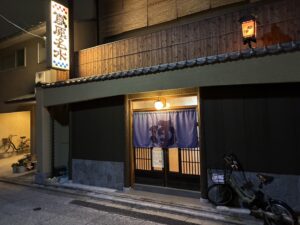
The unpretentious, authentic atmosphere of “Miyako-yu —Shimabara—” reminds me of the essential richness of
“just soaking in the bath” amidst my hectic days.
As a bathhouse cherished by locals for decades, “Miyako-yu —Shimabara—” is a special place that carries
Kyoto’s everyday culture into the present. Why not experience not just Kyoto as a tourist destination,
but the “real Kyoto” rooted in daily life?
Stepping through the warm curtain at dusk, then walking while feeling the cool night breeze after bathing —
such simple moments will surely become unforgettable memories of your journey.
Reference Links
- Kyoto Tsu no Susume: Episode 83 – Kyoto’s Baths
https://www.keihan.co.jp/navi/kyoto_tsu/tsu201503.html - A Giant Lake Beneath the Kyoto Basin / Eco House Research Association
https://ecohouse.ac/common/ecohouse/column/kyoto-bonchi.html - Cultural History of Shimabara / Kadoya Preservation Foundation
https://sumiyaho.sakura.ne.jp/page/history.html - Tour the O-zakari Rooms in Shimabara, Kyoto’s Little-Known Hanamachi
https://news.yahoo.co.jp/articles/31e41cce5e63e0fab4b2d1a0ab76431e79d30419 - Shimabara Meisui Natural Underground Water Overflow
https://www.instagram.com/p/DHs_UDpzCZV/