
Recommended Kyoto ramen spots: Daiei, Tenka Ippin Sohonten, Ginjo Ramen Kubota Honten, Menya-sanda.
Kyoto’s winters are bitterly cold, but snowfall is rare. Precisely because snowy landscapes are so seldom seen, the wonder and joy of witnessing one are all the more profound. If your trip coincides with snowfall, be sure to visit!
- Kinkaku-ji Temple
- Kifune Shrine
- Kurama Mountain (Yuki Shrine & Kurama Temple)
- Sanzen-in Temple
- Hōsen-in
- Jakkō-in Temple
- Shōrin-in Temple
- Jikkō-in Temple
- Raigō-in Temple
- Kamigamo Shrine
- Shimogamo Shrine
- Myōmanji Temple
- Ginkaku-ji Temple
- Nanzen-ji Temple
- Tenju-an
- Keage Incline
- Kitano Tenmangū Shrine
- Heian Jingu Shrine
- Shinsen-en Garden
- Nijo Castle
- Kiyomizu-dera Temple
- Gion Shirakawa
- Hokanji Yasaka Tower
- Shogun’s Mound
- Fushimi Inari Taisha
- Togetsukyo Bridge
- Bamboo Grove Path
- Tenryū-ji Temple
- Ryōan-ji Temple
- Tōfuku-ji Temple
- Amanohashidate
Kinkaku-ji Temple: Its golden splendor stands out even more against the silver world of snow
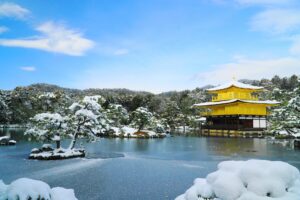
Kinkaku-ji Temple’s beauty is heightened by snow. The golden hues of Kinkaku-ji stand out even more against the silver-white world, creating a truly fantastical scene.
The snowy landscape of Kinkaku-ji is so captivating that it’s said, “When snow falls, Kyoto locals rush to Kinkaku-ji.” You can see the current state of Kinkaku-ji by checking the live camera on the official website.
| Facility Name | Kinkaku-ji Temple |
|---|---|
| Address | 1 Kinkakuji-cho, Kita-ku, Kyoto-shi, Kyoto 603-8361 |
| Phone | 075-461-0013 |
| Hours | 9:00 AM – 5:00 PM |
| Access | From Kyoto Station, take the Kyoto City Bus to “Kinkakuji-michi” stop, then walk 5 minutes. |
| Website | https://www.shokoku-ji.jp/kinkakuji/ |
| @rokuonji_kinkakuji.official |
Kifune Shrine: The contrast between the white snow and the red lanterns
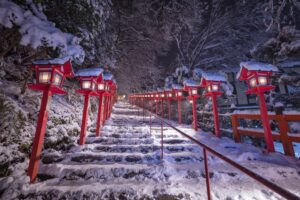
The contrast between Kifune Shrine’s red lanterns and vermilion torii gates against pristine white snow creates a uniquely charming winter scene.
On snowy weekends, a “Snowfall Day Limited Illumination” event is held. If timing allows, visiting at sunset is recommended. Please check the official website or social media for details.
| Facility Name | Kifune Shrine |
|---|---|
| Address | 180 Kibune-cho, Kurama, Sakyo-ku, Kyoto-shi, Kyoto 601-1112 |
| Phone | 075-741-2016 |
| Hours | Regular Season (May 1 – Nov 30): 6:00 AM – 8:00 PM Winter Season (Dec 1 – Apr 30): 6:00 AM – 6:00 PM Gift Shop & Shrine Office: 9:00 AM – 5:00 PM Prayer Service Reception: 9:00 AM – 3:30 PM |
| Access | From Eizan Electric Railway “Kibuneguchi Station”, take the Kyoto City Bus to “Kibune” stop, then walk 4 minutes. |
| Website | https://kifunejinja.jp/ |
| @kifunejinja | |
| X (Twitter) | @kifunejinja |
Kurama Mountain (Yuki Shrine and Kurama Temple): Silver snow accumulating on the tranquil sacred mountain
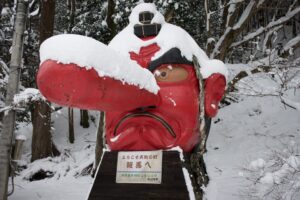
Kurama Mountain is known as “the closest to Kyoto yet the deepest in nature,” and legends remain of Minamoto no Yoshitsune, a martial arts master raised by the Kurama Tengu. At Kurama Station, the closest station to Kurama Mountain, stands the Kurama Great Tengu Monument, a symbolic presence of Kurama.
Kurama Mountain is home to Yuki Shrine and Kurama Temple. Visitors can enjoy the vivid contrast between the pristine white snow blanketing the tranquil sacred mountain and the vermilion hues of the temple gates and main hall. Part of the route can be accessed by cable car. Visiting together with nearby Kifune Shrine is recommended.
| Facility Name | Kurama Temple |
|---|---|
| Address | 1074 Kurama Honmachi, Sakyo Ward, Kyoto City, Kyoto 601-1111 |
| Phone | 075-741-2003 |
| Access | Kurama Station → 3 min walk → Mountain Gate (Niōmon) → 5 min walk → Yuki Shrine → 20 min walk → Kurama Temple Main Hall → 30 min walk → Maō-den → 20 min walk → Kifune Shrine → 40 min walk (or bus) → Kifuneguchi Station |
| Website | https://www.kuramadera.or.jp/ |
| @kuramadera_official |
Sanzen-in Temple: Halls and cedar groves enveloped in a pure white world
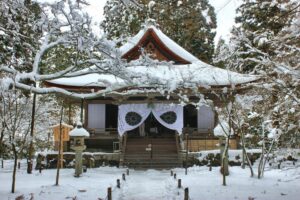
Located in the mountain village of Ohara in northern Kyoto City, an area known for its frequent snowfall. Visitors can see the temple halls and cedar groves enveloped in a pure white world.
| Facility Name | Sanzen-in Temple |
|---|---|
| Address | 540 Ohara Raigyoin-cho, Sakyo-ku, Kyoto City, Kyoto 601-1242 |
| Phone | 075-744-2531 |
| Hours | 9:00 AM – 4:30 PM (Mar–Oct: 9:00 AM – 5:00 PM, Nov: 8:30 AM – 5:00 PM) |
| Access | About a 10-minute walk from the Kyoto Bus “Ohara” bus stop |
| Website | http://www.sanzenin.or.jp/ |
| kyotooharasanzenin |
Hōsen-in: The snow-covered framed garden is truly “hard to leave”
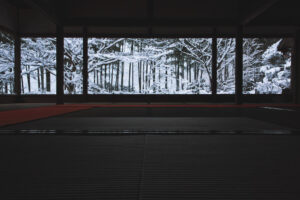
If you visit Sanzen-in, be sure to stop by Hōsen-in as well. The garden’s name, “Bankan-en”, means “a place one finds hard to leave.” Its beauty resembles a single painting framed within a picture frame. Admission includes tea and sweets, offering a luxurious winter moment to gaze upon the scenery while enjoying matcha. The snow-covered framed garden truly provides a winter moment “one finds hard to leave.”
| Facility Name | Hōsen-in |
|---|---|
| Address | 187 Ohara Shōrin-in-chō, Sakyō-ku, Kyoto-shi, Kyoto 601-1241 |
| Phone | 075-744-2409 |
| Hours | 9:00 AM – 5:00 PM (Last admission 4:30 PM) *Subject to change |
| Access | About a 15-minute walk from the Kyoto Bus “Ohara” bus stop |
| Website | http://www.hosenin.net/ |
| @kyoto_hosenin | |
| hosenin |
Jakkō-in Temple: The approach scenery created by snow-draped trees and stone steps
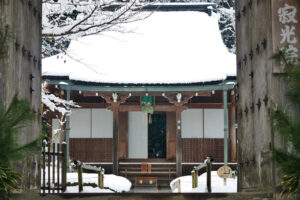
Jakkō-in Temple is known as the place where Kenreimon-in, daughter of Taira no Kiyomori, lived in seclusion. The highlight of its snowy scenery is the approach leading to the mountain gate. The landscape created by snow-covered trees and stone steps is beautiful.
| Facility Name | Jakkō-in Temple |
|---|---|
| Address | 676 Ohara Kusō-chō, Sakyō-ku, Kyoto-shi, Kyoto 601-1248 |
| Phone | 075-744-3341 |
| Hours | Dec 1 – Dec 31: 9:00 AM – 4:30 PM Jan 1 – Jan 3: 10:00 AM – 4:00 PM Jan 4 – Feb 28/29: 9:00 AM – 4:30 PM Mar 1 – Nov 30: 9:00 AM – 5:00 PM |
| Access | 15-minute walk from Kyoto Bus “Ohara” stop |
| Website | https://www.jakkoin.jp/ |
| @jakkouin |
Shōrin-in Temple: The history of the Ōhara Debate × the silence of the silver world
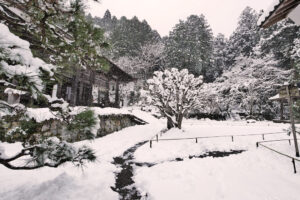
Shōrin-in Temple is a historic site where the Great Debate of Ōhara once took place. Following this debate, Hōnen, founder of the Jōdo sect, established the teaching of Nembutsu: that even ordinary people can be saved by believing in Amida Buddha’s vow and chanting “Namu Amida Butsu.”
When the main hall and garden are blanketed in deep snow, a profound stillness envelops the place. The beautiful silver world will help you forget the hustle and bustle of daily life.
| Facility Name | Shōrin-in |
|---|---|
| Address | 187 Shōrin-in-chō, Ōhara, Sakyō-ku, Kyoto-shi, Kyoto 601-1241 |
| Phone | 075-585-5177 |
| Hours | 9:00 AM – 4:00 PM |
| Access | 10-minute walk from Kyoto Bus “Ōhara” stop |
| Website | https://www.shourinin.com/ |
| shourinin | |
| X (Twitter) | @shourinin |
Jikkō-in Temple: The charm of the garden with its snow-covered pond
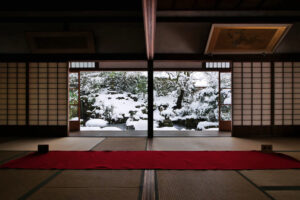
At Jikkō-in Temple, you can view the garden featuring a pond adorned with snow from inside the building. You can choose between a viewing tour with matcha tea or one without. One highlight is the Fudanzakura (ever-blooming cherry tree), which flowers during the winter season from autumn through spring and can be seen in the strolling garden.
| Facility Name | Jikkō-in Temple |
|---|---|
| Address | 187 Ohara Shōrin-in-chō, Sakyō-ku, Kyoto-shi, Kyoto 601-1241 |
| Phone | 075-744-2537 |
| Hours | 9:00 AM – 4:00 PM (subject to seasonal change) |
| Access | 10-minute walk from Kyoto Bus “Ohara” stop |
| Website | https://jikkoin.com/ |
| X (Twitter) | @jikko_in |
Raigō-in Temple: Snowy landscape of the mountain temple
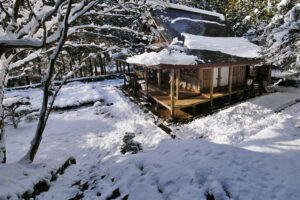
Raigō-in Temple served as a training hall for Shōmyō chanting, the musical recitation of sutras. Located further up the mountain path beyond Sanzen-in Temple, it is a serene mountain temple exuding a tranquil atmosphere. On days when Raigō-in Temple is blanketed in snow, the tall trees lining the main hall area are also enveloped in pure white snow, creating a snowy landscape unique to mountain temples.
| Facility Name | Raigō-in Temple |
|---|---|
| Address | 537 Ohara Raikoin-cho, Sakyo-ku, Kyoto-shi, Kyoto 601-1242 |
| Phone | 075-744-2161 |
| Hours | 9:00 AM – 5:00 PM |
| Access | 15-minute walk from Kyoto Bus “Ohara” stop |
| Website | souda-kyoto.jp |
Kamigamo Shrine: Large vermilion-lacquered gate and snow-covered sand mounds
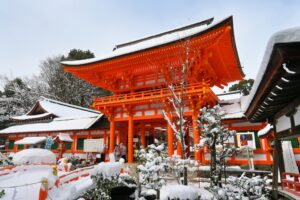
The snowy landscape at Kamigamo Shrine features its large vermilion-lacquered gate as a highlight. Snow accumulating on the tip of the tatezuna (a sacred sand mound where deities descend) also creates a scene symbolic of winter in Kyoto.
| Facility Name | Kamigamo Shrine |
|---|---|
| Address | 339 Kamigamo Motoyama, Kita Ward, Kyoto City, Kyoto 603-8047 |
| Phone | 075-781-0011 |
| Hours | Main Gate and Offering Office: 8:00 AM – 4:45 PM |
| Access | Immediately upon exiting at the “Kamigamo Shrine Mae” stop on the Kyoto Bus |
| Website | https://www.kamigamojinja.jp/ |
| @kamigamojinja.official | |
| TikTok | @kamigamojinja.official |
| YouTube | YouTube Channel |
Shimogamo Shrine: Large vermilion-lacquered gate and snow-covered deep forest
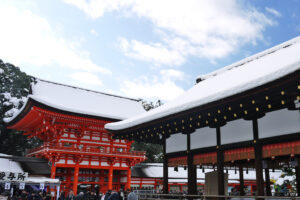
The highlight of Shimogamo Shrine’s snowy scenery is its vermilion-lacquered gate. The shrine also has an atmosphere of being nestled within a forest. When the deep forest is blanketed in snow, it creates a fascinating landscape resembling a white archway.
| Facility Name | Shimogamo Shrine |
|---|---|
| Address | 59 Shimogamo Izumigawacho, Sakyo Ward, Kyoto City, Kyoto 606-0807 |
| Phone | 075-781-0010 |
| Hours | 6:30 AM – 4:30 PM (Subject to change due to shrine rituals) |
| Access | 12-minute walk from Keihan “Demachiyanagi Station” |
| Website | https://www.shimogamo-jinja.or.jp/ |
| @kamomioyajinja | |
| X (Twitter) | @kamomioyajinja |
Myōmanji Temple: Pure white silver world “Snow Garden” with Mount Hiei as a borrowed landscape
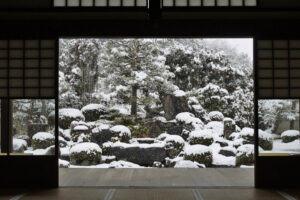
Myōmanji Temple features the renowned “Snow Garden,” a dry landscape garden (karesansui) that expresses the beauty of mountains and water through stone arrangements and variations in elevation rather than water. True to its name, this garden is especially suited to snowy scenes. It offers a panoramic view of a pure white, silver world with Mount Hiei as its borrowed landscape.
| Facility Name | Myōmanji Temple |
|---|---|
| Address | 91 Hataeda-cho, Iwakura, Sakyo-ku, Kyoto-shi, Kyoto 606-0015 |
| Phone | 075-791-7171 |
| Hours | 9:00 AM – 4:00 PM (Last admission) / Complete exit by 4:30 PM |
| Access | Immediately upon getting off at the Kyoto Bus stop “Hataeda (Myomanji)” |
| Website | https://myomanji.jp/ |
| @myomanji | |
| X (Twitter) | @myomanji |
| YouTube | YouTube Channel |
Ginkaku-ji Temple: Its ethereal beauty intensified by snow
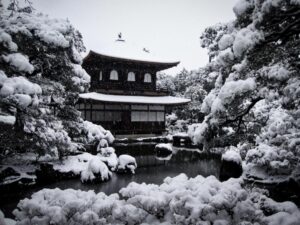
Ginkaku-ji Temple, a World Heritage Site embodying the aesthetic sensibility of wabi-sabi, was founded by Ashikaga Yoshimasa, the eighth shogun of the Muromachi shogunate in the late 15th century. In contrast to the splendor of Kinkaku-ji Temple, it is characterized by its simple, tranquil space, the asymmetrical beauty of its garden, and architecture that utilizes natural textures. The Japanese aesthetic based on the spirit of Zen still lives on here.
The snow-covered landscape, resembling a black-and-white ink painting, further enhances Ginkaku-ji’s profound and mysterious atmosphere.
| Facility Name | Ginkaku-ji (Silver Pavilion Temple) |
|---|---|
| Address | 2 Ginkakuji-cho, Sakyo-ku, Kyoto-shi, Kyoto 606-8402 |
| Phone | 075-771-5725 |
| Hours | Winter (Dec 1 – end of Feb): 9:00 AM – 4:30 PM Summer (Mar 1 – Nov 30): 8:30 AM – 5:00 PM |
| Access | Get off at the “Ginkakuji-michi” stop on the Kyoto Bus. |
| Website | https://www.shokoku-ji.jp/ginkakuji/ |
Nanzen-ji Temple: The imposing Sanmon Gate and spectacular snowy scenery
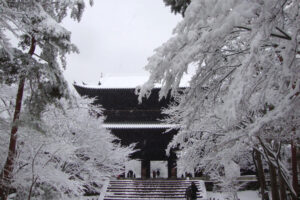
Nanzenji Temple’s Sanmon Gate is famous as a Kabuki stage. The sight of Nanzenji’s Sanmon gate with snow clinging to the trees, creating a scene of snow blossoms, is truly striking. Climbing the Sanmon gate offers a 360-degree view of the surrounding area, making you feel like you’ve truly arrived in a silver world.
Additionally, Nanzenji’s “Suirokaku” is a red brick arch structure built during the Meiji era. When snow accumulates, the contrast between its retro Meiji-era charm and the snow’s whiteness creates a profoundly atmospheric scene.
| Facility Name | Nanzenji Temple |
|---|---|
| Address | 86 Fukuchicho, Nanzenji, Sakyo-ku, Kyoto City, Kyoto 606-8435 |
| Phone | 075-771-0365 |
| Hours | Dec 1 – Feb 28: 8:40 AM – 4:30 PM Mar 1 – Nov 30: 8:40 AM – 5:00 PM |
| Access | 10-minute walk from Keage Station on the Tozai Subway Line |
| Website | https://nanzenji.or.jp/ |
| @daihonzan_nanzenji |
Tenju-an: Mystical trees and ponds covered in snow
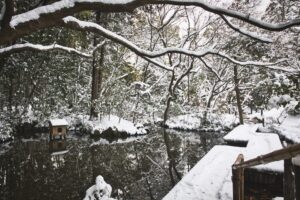
Tenju-an features two gardens: a rock garden notable for its geometric stone paving, and a strolling pond garden. Snow-covered trees and ponds create a mystical atmosphere.
| Facility Name | Tenju-an |
|---|---|
| Address | 86-8 Fukuchicho, Nanzenji, Sakyo-ku, Kyoto City, Kyoto 606-8435 |
| Phone | 075-771-0744 |
| Hours | 9:00 AM – 4:45 PM (until 4:30 PM from Nov 15 to end of February) |
| Access | 10-minute walk from Keage Station on the Tozai Subway Line |
| Website | souda-kyoto.jp |
Keage Incline: Abandoned railway tracks and cherry trees dyed silver white
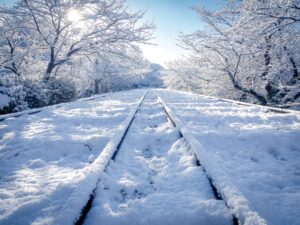
An incline refers to a “slope railway” — a railway designed for boat transport, where tracks are laid on steep mountain slopes and boats are loaded onto carts and hauled up or down by wire ropes. During the Meiji era, railway tracks were laid here, contributing to the development of Kyoto’s transport industry. However, with the times changing and land transport becoming more prevalent, the line was abandoned.
Today, the original tracks have been restored. Designated a national historic site, it stands as the world’s longest preserved inclined railway site at 582 meters. The snowy landscape of the Keage Incline offers a fantastical scene, with the abandoned tracks and cherry trees blanketed in white.
| Facility Name | Keage Incline |
|---|---|
| Address | 339 Higashikomonozacho, Higashiyama Ward, Kyoto City, Kyoto 606-8435 |
| Access | 5-minute walk from Keage Station on the Kyoto Municipal Subway Tozai Line |
| Website | ja.kyoto.travel |
Kitano Tenmangū Shrine: The collaboration of approximately 1,500 plum trees and snow
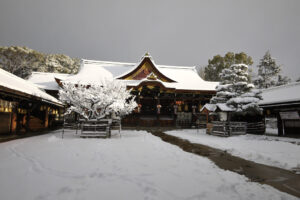
Kitano Tenmangū Shrine is the head shrine of approximately 12,000 Tenmangū and Tenjin shrines nationwide, enshrining Lord Sugawara no Michizane as its deity. It is a powerful power spot for academic achievement and exam success. Because Lord Sugawara no Michizane deeply loved plum blossoms, about 1,500 plum trees are planted here. When snow falls during the plum blossom season from February to March, visitors can witness the beautiful collaboration of plum blossoms and snow.
| Facility Name | Kitano Tenmangū Shrine |
|---|---|
| Address | Bakuro-chō, Kamigyō-ku, Kyoto-shi, Kyoto 602-8386 |
| Phone | 075-461-0005 |
| Hours | 7:00 AM – 8:00 PM |
| Access | Get off at the “Kitano Tenmangū-mae” stop on the Kyoto Bus |
| Website | https://kitanotenmangu.or.jp/ |
| @kitano_tenmangu |
Heian Jingu Shrine: Traditional Japanese architecture merges with tranquil snowy landscapes
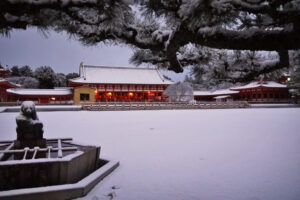
Heian Jingu Shrine features a strolling pond garden covering approximately 33,000 square meters. The fusion of traditional Japanese architecture and tranquil snowy landscapes creates a fantastical scene.
| Facility Name | Heian Jingu Shrine |
|---|---|
| Address | 97 Okazaki Nishi Tenno-cho, Sakyo-ku, Kyoto-shi, Kyoto 606-8341 |
| Phone | 075-761-0221 |
| Hours | Mar 1 – Sep 30: 6:00 AM – 6:00 PM Oct 1 – Oct 31: 6:00 AM – 5:30 PM Nov 1 – end of Feb: 6:00 AM – 5:00 PM |
| Access | 10-minute walk from Higashiyama Station on the Subway Tozai Line |
| Website | https://www.heianjingu.or.jp/ |
| @heianjingu_official |
Shinsen-en Garden: The contrast of the red Hōjō Bridge against the white snow
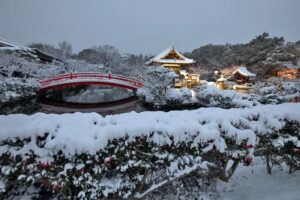
Shinsen-en Garden is the place where Minamoto no Yoshitsune and Shizuka Gozen first met, sparking their romance. It served as a banquet and leisure site for successive emperors and is a sacred site where Kobo Daishi Kukai performed rain prayers. The pond in Shinsen-en Garden is named “Hōjōju Pond” because Kobo Daishi achieved his spiritual power here and made it rain. In reference to this, the vermilion bridge spanning the pond is named “Hōjō Bridge.”
It is said that if you cross Hōjō Bridge while silently wishing for one thing and then visit the shrine, your wish will come true. The contrast between the red of Hōjō Bridge and the white of the snow creates a stunning, photogenic view.
| Facility Name | Shinsen-en Garden |
|---|---|
| Address | 166 Monzen-cho, Omiya Nishi-iru, Oike-dori, Nakagyo-ku, Kyoto City, Kyoto 604-8306 |
| Phone | 075-821-1466 |
| Hours | 6:30 AM – 8:00 PM |
| Access | 10-minute walk from Hankyu “Shijo-Omiya Station” |
| Website | https://www.shinsenen.org/ |
Nijo Castle: Snow accumulating in the ancient capital
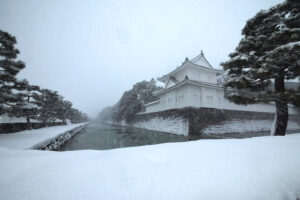
Nijo Castle is a historic site built by Tokugawa Ieyasu, where the 15th shogun, Tokugawa Yoshinobu, carried out the Restoration of Imperial Rule. When its imposing gates and palace buildings are dusted with snow, their opulent splendor is beautifully accentuated against the white backdrop. Snow accumulating on the strolling pond garden and the hybrid Japanese-Western garden creates a serene beauty. The contrast between the yagura (watchtowers) along the moat and the snow evokes the atmosphere of Edo Castle, as if you’ve slipped back in time to the Edo period.
| Facility Name | Nijo Castle |
|---|---|
| Address | 541 Nijojo-cho, Nakagyo-ku, Kyoto City, Kyoto 604-8301 |
| Phone | 075-841-0096 |
| Hours | 8:45 AM – 4:00 PM (Last entry 5:00 PM) |
| Access | A short walk from Nijojo-mae Station on the Tozai Subway Line |
| Website | https://nijo-jocastle.city.kyoto.lg.jp/ |
| @nijojocastle | |
| YouTube | YouTube Channel |
Kiyomizu-dera Temple: The Kiyomizu stage appears to float above the snow
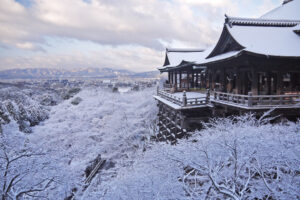
From the Kiyomizu Stage, you can enjoy panoramic views of Kyoto city and breathtaking scenery throughout the seasons. It’s also astonishing that it was built using the traditional “kakezukuri” construction method, where wooden pillars and beams are assembled without a single nail, projecting out over the cliff.
When snow accumulates at Kiyomizu-dera, the trees are delicately dusted with snow, making the Kiyomizu Stage and the Main Hall appear to float. It’s a spectacular sight.
| Facility Name | Kiyomizu-dera Temple |
|---|---|
| Address | 1-294 Kiyomizu, Higashiyama Ward, Kyoto City, Kyoto 605-0862 |
| Phone | 075-551-1234 |
| Hours | Gates open at 6:00 AM – Gates close at 6:00 PM |
| Access | 10-minute walk from Kyoto Bus “Kiyomizu-michi” or “Gojozaka” stops |
| Website | https://www.kiyomizudera.or.jp/ |
| @feel_kiyomizudera |
Gion Shirakawa: Vermilion-lacquered fences stand out against the snow
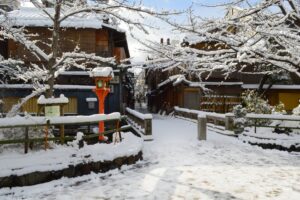
The area along Shirakawa Minami Street in Kyoto’s Higashiyama Ward is known as Gion Shirakawa. It is a special place where you can enjoy the unique atmosphere of Kyoto, with its rows of machiya townhouses lining the streets, cobblestone paths, and the sight of maiko heading to tea houses. When snow falls on Gion Shirakawa, the vermilion-lacquered tamagaki fences stand out beautifully against the snow, offering a quintessentially Kyoto snowy landscape.
| Place Name | Gion Shirakawa |
|---|---|
| Address | Kyoto City, Higashiyama Ward, Gion-machi North Side 605-0073 |
| Access | 3-minute walk from Keihan “Gion-Shijo Station” |
Hokanji Yasaka Tower: The dark brown five-story pagoda stands amidst the snow-covered stone-paved streets
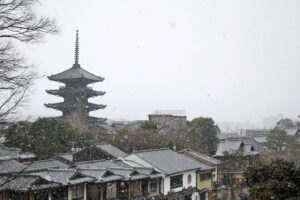
Hokanji Yasaka Tower is a symbol of Kyoto’s Higashiyama area. When snow falls on Hokanji Yasaka Tower, you can enjoy a breathtaking, ink-wash painting-like view: the dark brown five-story pagoda standing amidst the snow-covered stone-paved streets.
| Facility Name | Hōkanji Yasaka Tower |
|---|---|
| Address | 388 Kiyomizu Yasaka-ue-chō, Higashiyama Ward, Kyoto City, Kyoto 605-0862 |
| Phone | 075-551-2417 |
| Hours | 10:00 AM – 3:00 PM (No admission for junior high school students or younger; irregular holidays) |
| Access | 4-minute walk from Kyoto Bus “Kiyomizu-michi” stop |
| Website | souda-kyoto.jp |
Shōgunzuka: A panoramic view of Kyoto’s snowy landscape from the grand stage
It is said that Emperor Kanmu climbed to the site of Shogun’s Mound when deciding to establish Kyoto as the capital. Emperor Kanmu ordered a statue of a shogun to be buried in the mound to protect the capital — this is the origin of the name “Shogun’s Mound.” From the large stage, you can enjoy a panoramic view of the snow-covered landscape across all of Kyoto City.
| Facility Name | Shōgunzuka (Seiryūden) |
|---|---|
| Address | 28 Kuchio-chō, Yamashina-ku, Kyoto-shi, Kyoto 607-8456 |
| Hours | 9:00 AM – 5:00 PM (Last admission at 4:30 PM) |
| Access | 20 minutes by taxi from Kyoto Station |
| Website | https://www.shogunzuka.com/ |
Fushimi Inari Taisha: The vivid vermilion torii gates stand out against the silver world
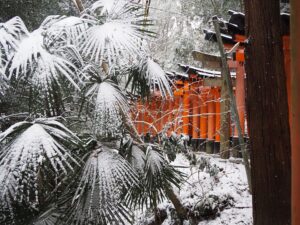
The head shrine of the approximately 30,000 Inari shrines said to exist nationwide. The Senbon Torii (Thousand Torii Gates) of Fushimi Inari Taisha originated from the practice, widespread since the Edo period, of worshippers dedicating torii gates as an expression of gratitude for their wishes being granted. Today, it presents a breathtaking sight with over 10,000 torii gates lining the path. When snow falls, the vivid vermilion torii gates stand out strikingly against the silver-white world.
| Facility Name | Fushimi Inari Taisha |
|---|---|
| Address | 68 Fukakusa Yabunouchi-cho, Fushimi Ward, Kyoto City, Kyoto 612-0882 |
| Phone | 075-641-7331 |
| Access | Immediately adjacent to Inari Station on the Nara Line |
| Website | https://inari.jp/ |
| @fushimiinaritaisha_official |
Togetsukyo Bridge: The contrast between snow-covered Arashiyama and the Katsura River
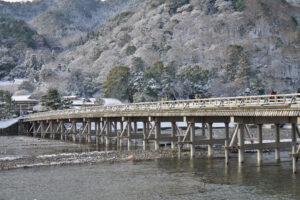
Togetsukyo Bridge, synonymous with Arashiyama. The snowy landscape of Togetsukyo Bridge in Kyoto’s Arashiyama offers a breathtaking view reminiscent of a sumi-e ink painting, contrasting snow-covered Arashiyama with the Katsura River. The railings and surrounding mountains are blanketed in white, creating a fleeting silver world that melts away as soon as the sun rises. The early morning hours offer the best chance to witness this particularly beautiful scenery.
| Place Name | Togetsukyo Bridge |
|---|---|
| Address | 1-5 Sagatenryuji Muginobabacho, Ukyo Ward, Kyoto City, Kyoto 616-8384 |
| Access | 2-minute walk from Keifuku Electric Railway (Arashiyama Line) “Arashiyama” Station |
| Website | ja.kyoto.travel |
Bamboo Grove Path: A fantastical snow scene where green stands out in a monochrome space
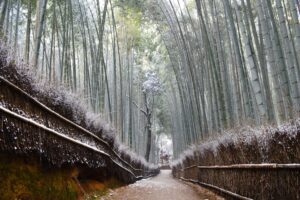
When snow falls on Kyoto’s Arashiyama Bamboo Grove Path, white snow accumulates on the lush green bamboo, creating a fantastical snow scene where green stands out against the monochrome landscape.
| Place Name | Bamboo Grove Path |
|---|---|
| Address | Sagakurayamadafuchiyamacho, Ukyo Ward, Kyoto City, Kyoto 616-8394 |
| Access | Get off at “Arashiyama” Station on the Keifuku Electric Railway (Arashiyama Line), 10-minute walk |
| Website | ja.kyoto.travel |
Tenryū-ji Temple: Feel the essence of a Zen temple from its crisp snow garden
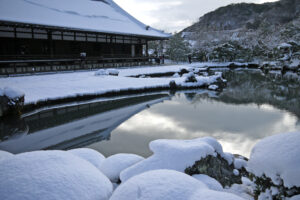
The Sōgen Pond Garden borrows the majestic Arashiyama landscape as its backdrop. The crisp snow-covered garden possesses a monochrome beauty, offering perhaps the most quintessential Zen temple experience. The “morning” is especially recommended. As the sun rises, enveloping the entire snowy garden in warm light, the scenery is breathtakingly beautiful.
| Facility Name | Tenryū-ji Temple |
|---|---|
| Address | 68 Sagatenryūji Susukinobabachō, Ukyō-ku, Kyoto-shi, Kyoto 616-8385 |
| Phone | 075-881-1235 |
| Hours | 8:30 AM – 5:00 PM (Last admission at 4:50 PM) |
| Access | Immediately upon exiting Arashiyama Station on the Randen Railway Arashiyama Main Line |
| Website | http://www.tenryuji.com/ |
| @heavenly_dragon.temple | |
| X (Twitter) | @tenryu_ji |
Ryōan-ji Temple: The rock garden, dressed in snow, resembles an ink wash painting
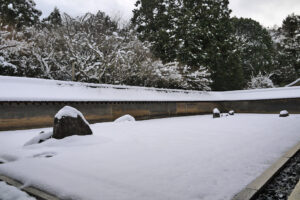
When the intricately designed rock garden is blanketed in snow, it resembles a traditional ink painting.
| Facility Name | Ryoanji Temple |
|---|---|
| Address | 13 Ryoanji Goryo-no-shita-cho, Ukyo-ku, Kyoto-shi, Kyoto 616-8001 |
| Phone | 075-463-2216 |
| Access | 7-minute walk from Ryoanji Station on the Arashiyama Electric Railway Kitano Line |
| Website | http://www.ryoanji.jp/top.html |
| @ryoanji_ |
Tōfuku-ji Temple: The Tōtsū Bridge and the beauty of the silver valley
The “Tsūten Bridge,” spanning as if traversing the sky, is a famous spot for autumn leaves. When snow falls, the valley transforms into a world of silver, revealing a solemn and fantastical scenery distinct from the autumn foliage season.
| Facility Name | Tofukuji Temple |
|---|---|
| Address | 15-778 Honmachi, Higashiyama Ward, Kyoto City, Kyoto 605-0981 |
| Phone | 075-561-0087 |
| Hours | 9:00 AM – 4:00 PM |
| Access | Get off at Tofukuji Station on the Nara Line, 7-minute walk |
| Website | https://tofukuji.jp/ |
| @tofukuji_zen_temple | |
| YouTube | YouTube Channel |
Amanohashidate: Amanohashidate, likened to a dragon ascending to heaven, appears like a “white dragon”
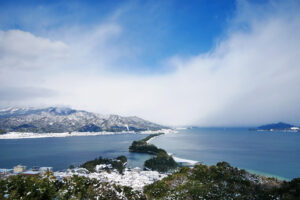
From Kasamatsu Park on the northern side of Amanohashidate and Amanohashidate Viewland on the southern side, you can view Amanohashidate through the “legs-apart view.” Amanohashidate, seen inverted through this legs-apart view, is called the “Ascending Dragon View” and the “Flying Dragon View,” likened to the form of a dragon ascending to the heavens. When Amanohashidate is covered in snow, it reveals a form resembling a “white dragon.”
| Facility Name | Amanohashidate View Land |
|---|---|
| Address | Bunshu, Miyazu City, Kyoto Prefecture 626-0001 |
| Phone | 0772-22-1000 |
| Access | Get off at Kyoto Tango Railway “Amanohashidate Station,” about a 5-minute walk |
| Website | https://www.viewland.jp/ |
| @amanohashidate_view_land | |
| X (Twitter) | @asj_viewland |
| YouTube | YouTube Channel |